What Knowledge Workers Need To Know About Meetings

“Meetings are the factory floor for knowledge workers.” Dick Axelrod

There are probably hundreds of articles floating through the web “demonizing” meetings, depicting the majority of meetings to be unproductive and a complete waste of time and money. Having worked in the engineering services business for years and, through this experience relying heavily on meetings for team alignment, collaboration, innovation and production, I have never agreed with these articles. So, when I saw this quote from Mr. Axelrod I was very curious to understand his side of the story.

His philosophy is basically that meetings are where a lot of work gets done or should get done in today’s organizations. Because of the complexity of business today and the interaction that is needed between so many different components of a business (internal and external to the business), people must meet face to face or virtually in order to have alignment in the business. Now, not all meetings are run properly so not all meetings are productive (see the Tripp Crosby youtube video for an example ). Axelrod goes on to provide a solid model and methodology for running meetings that are focused and productive. See his book Let’s Stop Meeting Like This: Tools to Save Time and Get More Done (BK Business) for more details.
What Everybody Can Learn About Business From Mountain Biking

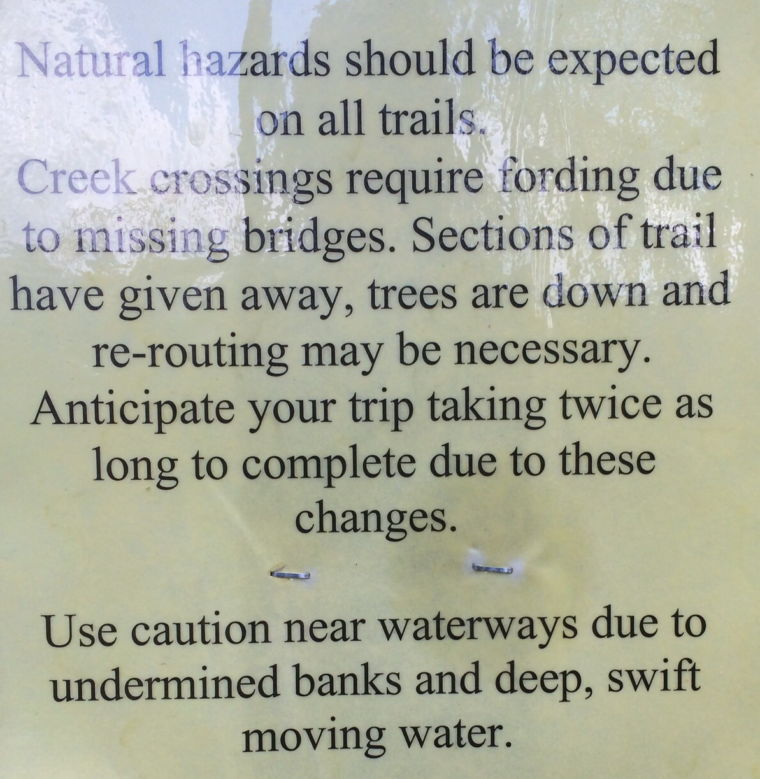
I am an avid mountain biker and recently went on a ride that I have done many times in the past. It is a 28 mile single track ride in the Canadian Rockies that climbs and then descends over 4300 feet. In good weather I typically complete this trip in 3.5 hours. This time, however, it took me 5.5 hrs as I did not see the warning sign at the train head (picture above) until after I was finished! Due to significant flooding the previous year, the trail was literally destroyed in many places and required a lot of detours and carrying my bike while dealing with washouts, rock avalanches, mountains of debris and missing bridges.

Mountain biking 2


I could not help thinking about the parallels between mountain biking and business as I was fighting my way through these obstacles. I have listed some of them below;

What Is a Business Compass and Why Is It Important?

Back in 2011, I read an article in the Harvard Business Review magazine entitled “The Power of Collective Ambition” (by Douglas A. Ready and Emily Truelove) that introduced a concept called the Business Compass.

The business compass is a simple diagram that shows very clearly what your business does, why it does it and how it will get it done.

The diagram brings together into one integrated picture the organization’s Vision, Mission, Values, Strategic Goals and Operational Priorities, Brand Promise and Leadership Behavior. It provides extreme clarity for anyone who is wondering what the organization is all about.

After reading the article, I applied the concept to the business I was running and was impressed with the focus that it brought to the organization. A diagram of the model and the definition of its components are described below. You can download the Business Compass Visio template from the Business Tools page.

What Does Your Organization Value?

Over the past month or so, my blog posts have dealt with organizational vision and mission. In the Vision post I defined organizational vision as “a picture of the future which creates an ideal and unique image of what the organization will become and/or the impact it will make.”. In the Mission post I defined organizational mission as “a definition of where you are going and what your organization is doing right now to attain the vision.”

So, what are organizational values and how do they fit in with vision and mission?

Organizational values are the bedrock of an organization. They are the foundation on which the organization is built. They describe the individual and corporate behaviors that will get the organization from where it is now, to achieving the mission and living the vision. Values are the driving forces that will lead your organization to success. A few examples of organizational values are;

What is Your Company’s Mission and Why Should You Care?

A few weeks ago, I posted “What Is Your Company’s Vision and Why Should You Care?” In this article I defined Vision as “a picture of the future which creates an ideal and unique image of what the organization will become and/or the impact it will make.” I wrote about the importance of keeping the vision of your organization concise but powerful and portable so that it can be easily remembered, modeled, communicated and transferred.

Equally important for your organization is a mission statement. The mission statement defines where you are going and what your organization is doing right now to attain the vision.

Where the vision statement is broad, the mission statement should be specific. The vision for the organization should remain constant over time while the mission can change depending on what the organization is able to achieve and depending on market forces. The mission statement can also include some key success factors and parameters that allow the organization to clearly see and measure success as you move towards fulfilling the mission.